

Table of Contents
Starting an e-commerce business in 2026 isn’t just about putting products on a website; it’s about building a digital ecosystem that survives and thrives in the Kenyan market. From the bustling streets of Nairobi to the doorsteps of Kisumu, your store needs to be fast, secure, and M-Pesa ready.
If you have already followed our guides on choosing a domain and buying hosting, you are halfway there. Now, let’s build the storefront.
1. Choose Your Business Model

Before you touch any code, decide how you will handle inventory:
- Inventory-Led: You buy stock in bulk and store it in your own warehouse or home.
- Dropshipping: You sell products from a supplier who ships them directly to the customer.
- On-Demand: Products are created only after an order is placed (common for custom apparel).
2. Picking the Right Platform: Shopify vs. WooCommerce
This is the most critical decision you will make. In 2026, the choice usually comes down to these two:
Shopify: The “Hands-Off” Powerhouse

Shopify is a hosted “Software as a Service” (SaaS) platform.
- Pros: Zero maintenance. They handle security, server updates, and high-traffic surges. It’s incredibly fast to set up.
- Cons: You pay a monthly subscription (approx. $25–$39) plus transaction fees. You don’t “own” the software; you are renting it.
- Kenyan Edge: Integrates seamlessly with local gateways like Pesapal and Flutterwave for M-Pesa payments.
WooCommerce: The “Total Control” Engine
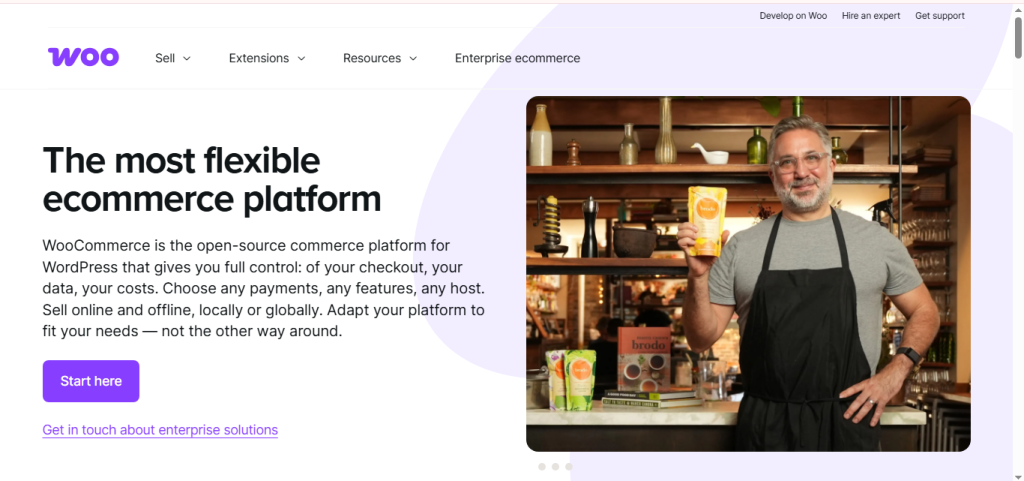
WooCommerce is a free plugin for WordPress.
- Pros: You own everything. There are no monthly platform fees, and it offers infinite customization.
- Cons: You are responsible for security, updates, and choosing a high-performance host like Novahost to keep it fast.
- Kenyan Edge: Best for content-driven SEO and complex shipping rules specific to Kenyan counties.
3. M-Pesa Integration (The Checkout Secret)

Kenyan buyers trust M-Pesa above all else. Your checkout must be frictionless.
- STK Push: The gold standard. The customer enters their number, and a PIN prompt pops up on their phone.
- Manual Paybill: Common but leads to more abandoned carts because it requires too many steps.
- Recommendation: Use Paystack or Flutterwave to handle these integrations automatically on either Shopify or WooCommerce.
4. Logistics: From Warehouse to Doorstep

In 2026, Same-Day Delivery is no longer a luxury; it’s an expectation in Nairobi.
- Nairobi & Peri-Urban: Use providers like Codirect Courier or MotorSpeed for rapid last-mile delivery.
- Nationwide: Fargo Courier remains the king of reaching all 47 counties.
- Automated Logistics: Platforms like Lilwa offer APIs that connect directly to your store, allowing you to book riders automatically when an order is placed.
5. Legal Compliance in 2026
Kenya has modernized its e-commerce laws. Ensure you are compliant with:
- Data Protection Act: You must have a clear Privacy Policy explaining how you handle customer data.
- Consumer Protection Act: You are legally required to provide clear return/refund policies and accurate product descriptions.
- KRA Integration: If your turnover is high, ensure your system can generate e-TIMS compliant invoices.
E-commerce Launch Checklist
| Stage | Action Item | Recommended Tool/Service |
| Foundation | High-Speed Hosting | Novahost NVMe Hosting |
| Platform | Build the Store | Shopify (Easy) or WooCommerce (Custom) |
| Payments | Accept M-Pesa | Paystack / Flutterwave |
| Logistics | Last-Mile Delivery | MotorSpeed or Pick Up Mtaani |
| Marketing | Drive Traffic | Google Ads & Instagram Reels |
Conclusion: Move Fast, But Build Solid
The biggest mistake Kenyan entrepreneurs make is rushing to launch a cheap site that crashes during a sale or fails to confirm M-Pesa payments. Your online store is a business, not a hobby.
At Tasflex Designs, we specialize in building enterprise-grade e-commerce stores that are fully integrated with M-Pesa and local logistics. Whether you need a simple Shopify setup or a high-performance WooCommerce architecture, we ensure your store is built for scale.
Explore our E-commerce Development services and let’s launch your digital flagship store today.
Frequently Asked Questions (FAQs)
1. Is it better to sell on Jumia or my own website?
Jumia and Kilimall provide immediate traffic, but they take a large commission and you don’t “own” the customer. We recommend a hybrid approach: Sell on marketplaces for reach, but use your own Tasflex-designed website to build your brand and keep 100% of your profits.
2. How much does it cost to run a Shopify store in Kenya?
Expect to pay at least $25/month (approx. KSh 3,500) for the basic plan, plus small transaction fees for every M-Pesa payment processed.
3. Do I need a physical shop to start an online store?
No! Many of the most successful Kenyan brands in 2026 are “Digital Native.” They operate out of dark stores or warehouses and handle everything online.
4. How do I handle returns and refunds?
Modern logistics providers like Pick Up Mtaani offer “Reverse Logistics” where customers can drop off returns at designated points. Ensure your website clearly states your refund window to build trust.
5. How do I get my first 100 customers?
Focus on Social Commerce. Use Instagram and TikTok to showcase your products, and drive that traffic to your website for the final checkout. Combine this with the SEO strategies we discussed to capture “organic” search traffic.