
Table of Contents
Imagine walking down a street looking for a place to eat dinner. You pass two restaurants side by side. The first one has broken neon lights, dirty windows, a confusing handwritten menu taped to the door, and no visible staff inside. The second one has a clean, modern storefront, clear pricing, warm lighting, and a welcoming entrance.
Which one do you walk into? The answer is obvious. You choose the second one because it instantly looks professional, safe, and trustworthy.
In mid-2026, your website is the digital storefront for your business. Before a customer ever reads your about page, speaks to your sales team, or looks at your products, they look at your design. Web design isn’t just about making things look pretty; it is a direct driver of how much money your business makes.
Let’s look at the data-backed psychology of how design builds human trust, where most businesses get it wrong, and how to structure your site to boost sales.
The Split-Second Judgment: The 50-Millisecond Rule
When a human being lands on your website, their brain goes to work instantly. Research shows that it takes a visitor just 50 milliseconds (0.05 seconds) to form a first impression of your website.
In less than the blink of an eye, a potential customer has already subconsciously decided whether your business is professional or amateur. In fact, web design influences 94% of all first impressions.
If your layout looks messy, outdated, or confusing, visitors will hit the back button before they read a single line of your text. When this happens, your business loses credibility before you even have a chance to pitch your services. If you think your current site might be sending the wrong signals, read our breakdown on the hidden reasons why your website fails to build trust and authority.
3 Design Pillars That Instantly Build Customer Trust
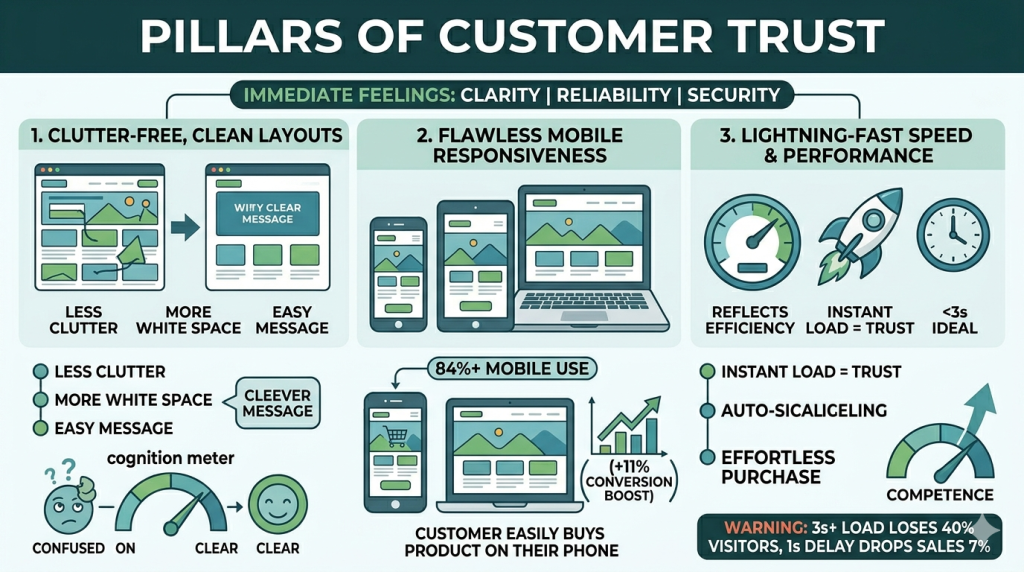
To turn a random internet user into a paying customer, your website design must deliver three specific feelings immediately: clarity, reliability, and security.
1. Simple, Clean Layouts (Banish the Clutter)
When a website is packed with too many moving animations, flashing banners, and giant walls of text, the visitor’s brain experiences cognitive overload. They get confused, and a confused mind always says “no.”
Modern, high-converting web design uses plenty of white space (empty room around text and images). This allows the visitor’s eyes to glide naturally down the page, making your main business message easy to understand.
2. Flawless Mobile Responsiveness
Over 84% of internet users prefer navigating websites on their smartphones rather than a laptop. If a customer opens your website on their phone and the text is microscopic, the images break, or the menu is impossible to tap, they will leave immediately.
A responsive design means your website automatically stretches, shrinks, and shifts to look beautiful on any screen size. Websites that get this right enjoy an immediate 11% boost in conversion rates because they make the buying journey completely effortless.
3. Clear Speed and Smooth Performance
Speed is the ultimate reflection of business competence. If your website takes more than 3 seconds to load, you lose interest from nearly 40% of your audience. Even a tiny 1-second delay can drop your sales by 7%.
When a site loads instantly, it sends a subconscious signal to the buyer that your company is efficient, modern, and values their time. This balance of layout and lightning-fast speed is the foundation behind the secret behind high-converting websites.
How Design Transforms Casual Visitors into Paid Sales
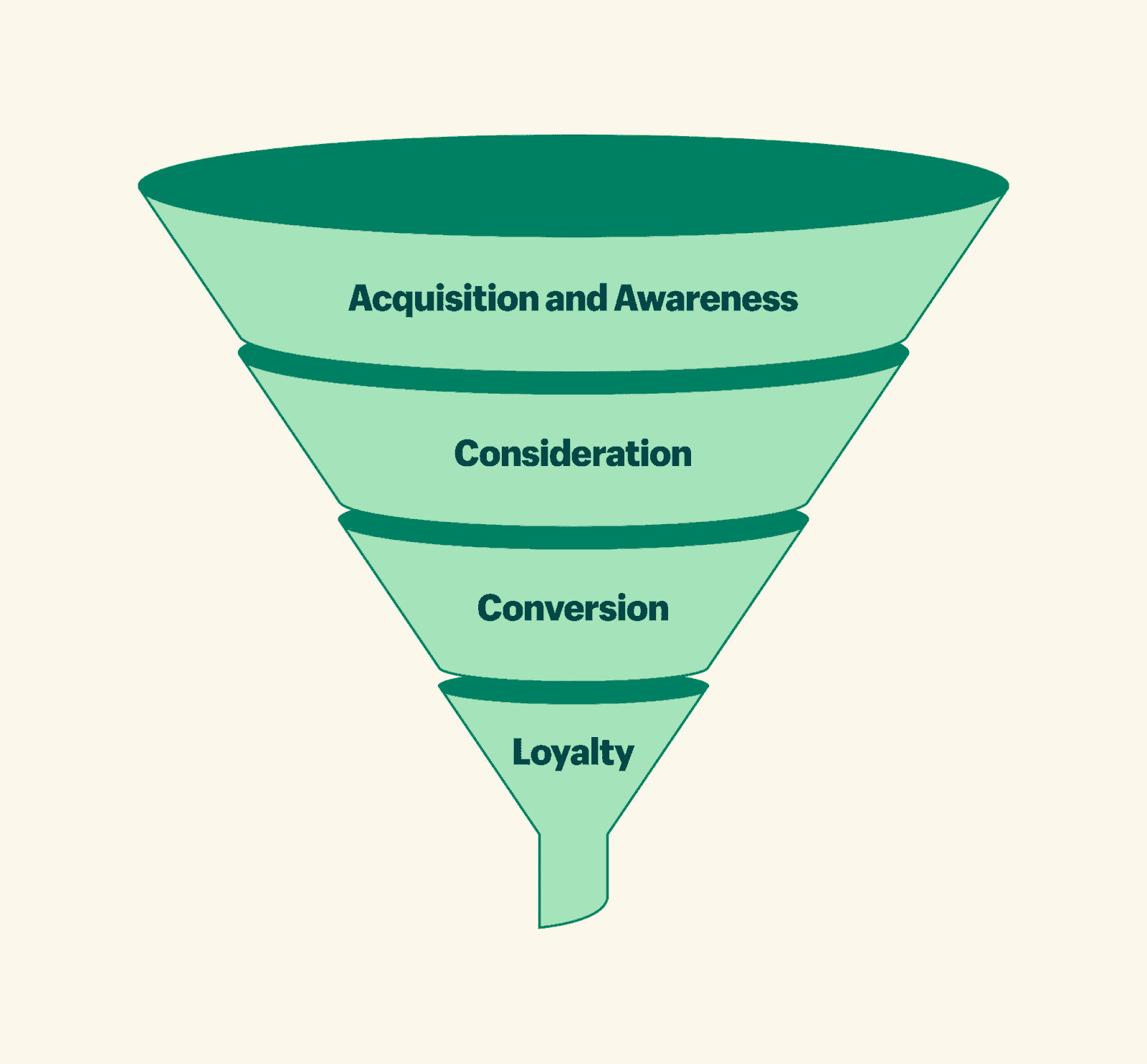
Once a design has established trust, its next job is to guide the user toward making a purchase or booking a call. Design acts as an invisible sales guide through two main tools:
Visual Hierarchy (Guiding the Eye)
Visual hierarchy means arranging your design elements so that the most important information stands out first. Your primary heading should be large and bold, followed by supporting benefits, and ending on a prominent action button. By controlling the size, color, and placement of your elements, you control exactly where the customer looks.
Actionable, Eye-Catching Call-to-Action (CTA) Buttons
A Call-to-Action is a button that tells the customer exactly what to do next (e.g., “Get a Free Quote” or “Buy Now”). If your CTA button is small, grey, and hidden at the bottom of the page, nobody will click it. High-performing designs use bright, contrasting colors for buttons and place them in strategic locations where the customer is naturally ready to take action.
Comparison Matrix: Trust Builders vs. Trust Killers
| The Trust Killers (Drives Sales Away) | The Trust Builders (Increases Sales) |
| Outdated, messy layouts that look like they were built in 2012. | Clean, modern visuals with a consistent brand color scheme. |
| Hidden or confusing navigation menus that make information hard to find. | Simple menu structures where pages can be found in 2 clicks or less. |
| Broken links and layout errors on mobile phone screens. | 100% responsive design built for mobile-first shoppers. |
| Missing security features (like a missing SSL padlock icon in the browser). | Visible trust signals like secure checkout badges and customer reviews. |
By fixing these basic design mistakes, you don’t just improve how your business looks online—you fundamentally change how your digital marketing functions. Ensuring your storefront is optimized is the first step in unlocking how SEO helps businesses get more traffic, leads, and sales.
Frequently Asked Questions (FAQs)
Can a bad website design hurt my business’s real-world reputation?
Yes. Consumers view a company’s website as a direct reflection of their real-world product or service quality. If your website looks cheap, broken, or unpolished, customers will assume that your customer service, physical products, or operational standards are cheap and unpolished as well.
How often should a business redesign its website to maintain trust?
On average, businesses update or completely redesign their websites every 2 to 3 years. This ensures the site stays compatible with modern mobile devices, updates security standards, and matches evolving consumer design tastes.
What is the most important color for a business website?
There is no single best color, but psychology plays a huge role. Blue is the most popular choice for corporate and financial sites because it triggers feelings of security and stability. Green works well for health and growth industries, while bright colors like orange or red are fantastic for action-oriented buttons.
Turn Your Website into a High-Performing Growth Engine
Your website is working for your business every single second of the day. If your current design is cluttered, slow, or frustrating to use on a smartphone, you are silently losing customers to competitors who have invested in a cleaner user experience. Good web design is not an unnecessary cost, it is the ultimate sales tool.
Don’t let a poor design undermine your hard work. Let’s build a clean, secure, and fast digital storefront designed to instantly earn customer confidence and grow your bottom line. Explore our high-performance Tasflex web design, branding, and strategic development services, and let’s engineer an online presence built for massive sales growth and get your brand recognized by Google.